A recruiter contacted me after my contract at Plerion ended. We spoke about the company and the role. He asked about my salary expectation, I gave him a number, and he passed my details to the company.
The first interview went well. We talked about the work, the problems they were trying to solve, and what I would be doing if I joined. They said they would get back to me within a week.
Two weeks later, I followed up. HR said they were busy with project deadlines and fiscal-year closing. Fine.
A week later, they scheduled a second interview. That went well too. By the end of the conversation, the whole thing felt less like maybe and more like when. We talked about the role, the work, and what I would be doing. Nothing suggested that the position itself was uncertain. I started treating it as a real possibility.
Then there was more silence. I followed up again. A few days later, HR called. The position was being put on hold because of financial constraints.
That was it.
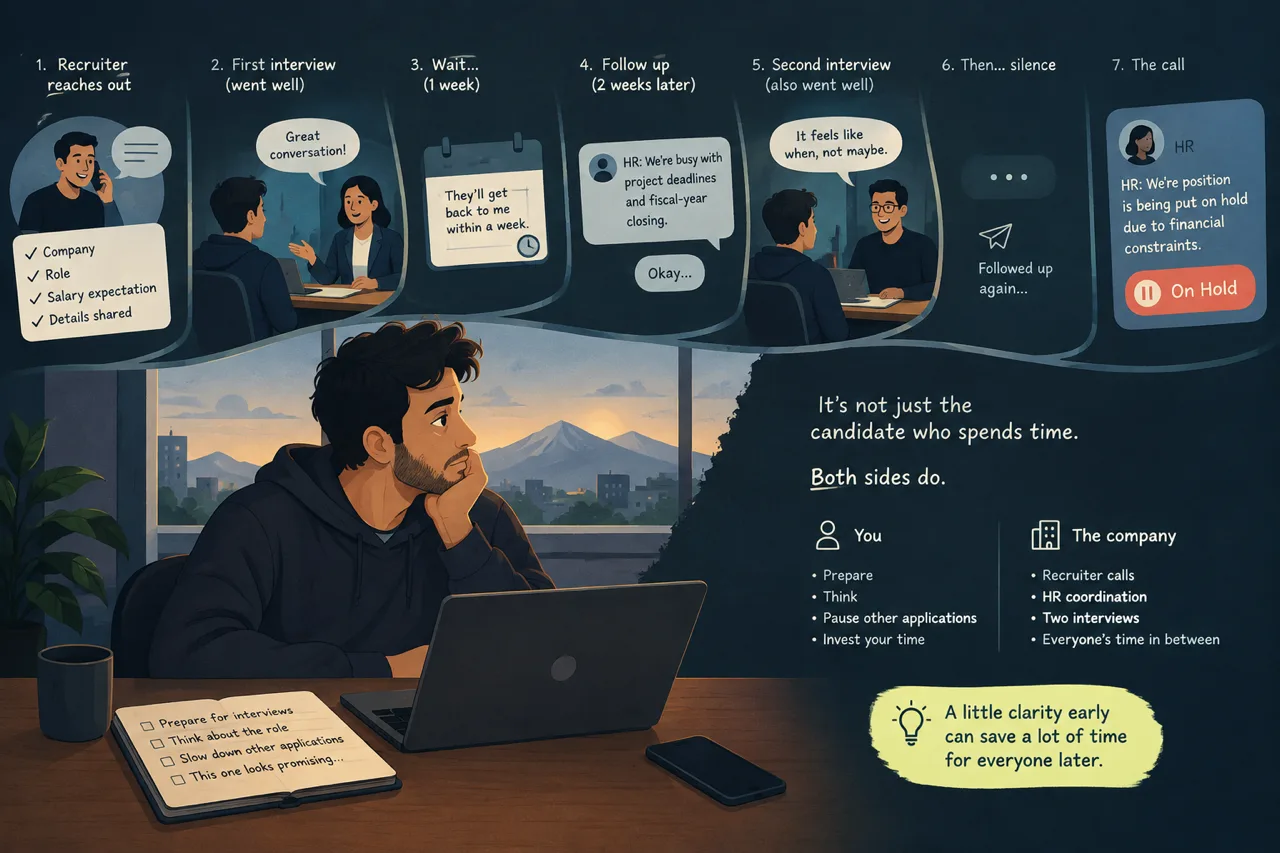
The frustrating part wasn’t that I didn’t get the job. It was that the process had gone this far before anyone realised, or communicated, that the job might not happen. By then, I’d spent time preparing for two interviews, thinking about the role, and slowing down other applications because this one looked promising.
The company had spent time too: recruiter calls, HR coordination, two interviews, and everyone’s time in between. So the cost wasn’t just a candidate waiting for an answer. Both sides spent time on a position that ultimately wasn’t ready to be filled.
This is where companies can do better. Before starting interviews, make sure the role is approved and the budget is there. If funding is uncertain, say so at the beginning. If a decision is pending, candidates should know before they invest their time.
And as the process moves forward, don’t create more certainty than you actually have. There is a difference between “we like your profile” and making someone feel the job is essentially theirs.
Good candidates understand that hiring takes time and plans can change. What they cannot see is what is happening inside the company. So if something changes, tell them.
A little clarity early can save a lot of time for everyone later.